
Why You Should Never Use Canned Tomatoes

By Hannah Healy
Updated July 26, 2023
This post may contain affiliate links. As an Amazon Associate I earn from qualifying purchases. Please read the disclosure policy.
Many people are shocked when I tell them that canned tomatoes are bad. After all, tomatoes are a vegetable (or technically fruit), so how can they be bad? Well, it has more to do with the packaging than the actual food.
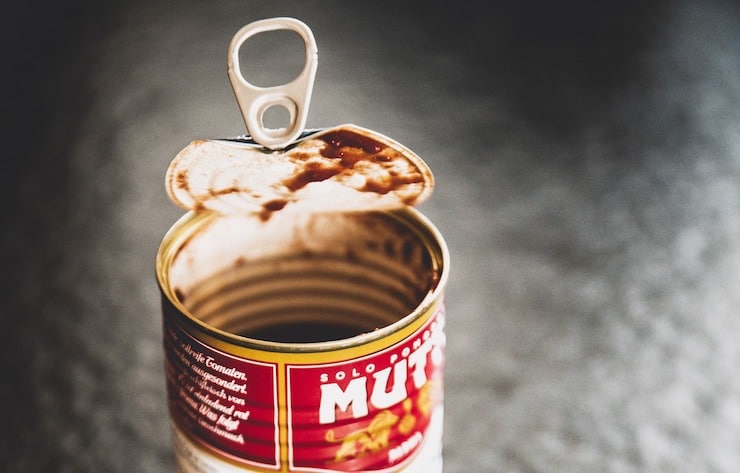
If you are used to using canned tomatoes regularly, you may want to reconsider. Although they are very common, canned tomatoes are not always a healthy option. Continue reading to find out why they can be dangerous and what to use instead…
Bisphenol-A (BPA), A Harmful Chemical
Most of us know that BPA is harmful. BPA, shortened from bisphenol-a is a chemical used to coat the lining of cans and most plastic products.
BPA can leach into foods and drinks by way of plastic containers, Tupperware, bottles, and cans.
Children are most susceptible to the effects of BPA chemicals. Below are just a few of the health problems linked to BPA exposure…
- hormonal disruption
- reproductive harm
- increased risk of certain cancers
- malformation of organs in children
- risk of miscarriage
- sperm defects
- increased risk of mental disabilities in babies.
BPA exposure is widespread, mostly because BPA is in most plastics and we use use so much of it, especially around our food. A survey conducted by the Centers for Disease Control found detectable levels of BPA in 93% of 2517 urine samples from people older than 6 years old.
Why Are Canned TOMATOES so bad?
It’s true that most cans have BPA lining, unless it is labelled otherwise, so why am I singling out canned tomatoes?
I’m focusing on canned tomatoes because since tomatoes are highly acidic, it draws out more of the BPA into the food from the lining. So, canned tomatoes have an especially high risk of leaching BPA into the tomatoes because of the acidity. This is not to say that other canned goods do not also pose BPA exposure risks (they most certainly do), but tomatoes are one of the worst offenders.
Is it JUST Canned Tomatoes that pose a risk?
No. Although canned tomatoes may draw out BPA more than other foods, any canned food can leech BPA into your food. One study from the Journal of Environmental Research showed that people had detectable levels of BPA in their urine after consuming canned foods including soup, fruits and vegetables. Therefore, I find it’s best to avoid canned foods as much as you can and try to choose glass jars instead.
Don’t be fooled by BPA-FREE Cans!
Unfortunately, BPA-free cans don’t really solve the problem. When the word started getting out about the dangers of BPA a few years ago, consumers started demanding that companies quit using BPA. So, companies responded to consumer pressure and largely removed BPA from their packaging, BUT they replaced it with another chemical that has similar associated health risks called BPS–Bisphenol S.
So, even though the thought of a BPA-free label may comfort many consumers, it’s a false promise. The cans and plastics labelled as BPA-free will still have some sort of chemical in them and usually it’s BPS. That’s why I always recommend using natural products like glass and stainless steel to avoid ANY type of plastic.
So what should you do if you want to use preserved tomatoes?
It’s not too hard to find alternatives for canned tomatoes. Below are 3 great options:
- Use organic tomatoes in glass jars like this
- Use fresh tomatoes instead
- Learn how to can your own tomatoes in jars
Luckily it’s not too hard to find healthy alternatives for using preserved tomatoes. That way it makes it easy to make tasty recipes like my chicken tomato soup!
This post was originally posted in January of 2014, but has been updated and republished in July of 2018 to include recent studies and updated photos.

Can you edit the last sentence? I dont understand what you mean when you say “avoid any type of plastic like glass and stainless steel”. I’m not sure these materials ever became types of plastic and you previously recommended glass jars. 0.o
Sorry, I didn’t mean to word that so confusingly. I edited it, what I meant is “That’s why I always recommend only using natural products like glass and stainless steel to avoid ANY type of plastic.” Thanks for pointing that out! 🙂
Grow your own tomatoes and then can them in bottles…..been doing this for 45yrs.
I used to work in a cannery and the cans were always lined with porcelain! I know this for a fact as I was the one who had to put them on the production line and make good and sure the cans didn’t get chipped. I do all my own home canning anyway because I seen what goes into the cans and Chemicals from plastics would be the last of my worries!!!!
Eden Organic uses a oil based lining taken from plants
They are BPA and BPS FREE
Right off the bat, I know this is not completely ture. Tupperware DOES NOT have BPA in it. In fact, Tupperware is so expensive because it doesn’t have the harmful chemicals in it that are found in other cheap plastics.
I am using the word tupperware as a general term for plastic storage containers. However, if you read the full article, you will see that even if something is BPA-free it is often replaced with BPS, which has similar health concerns. If you want to avoid chemicals and not pollute the environment it’s best to try to avoid ALL plastics regardless of if they’re BPA-free or not.
I do canning of a lot of food and was ready to switch to TATTLER canning lids because they can be reused. They advertise NO BPA. They don’t mention BPS. Then I read that they outgas FORMALDAHYDE. No thanks.
Here’s another alternative: Tomatoes can be frozen. I have tossed washed ripe paste-type tomatoes into the freezer on a cookie sheet, and then bagged them (you could use a glass container). The thawed consistency is between fresh and canned. Great for stewed tomatoes, pizza, chili, soup, or sauce.
I also freeze homemade tomato sauce or pureed fresh tomatoes in glass jars if I don’t have time to can. Comes out great! Just be careful to leave plenty of space at the top of the jar so it doesn’t break when frozen.
That’s another great alternative Mary Kate. Thanks for sharing! Maybe I’ll include that in the article too.
Where do you have this information from? I am all for a healthy, chemical-free lifestyle but unfortunately in most of such articles there are no source listed whatsoever, which takes away credibility. I wish, all articles we find in the internet would use proper citation.
There are sources in the article. If you read the full article you will find sources that have links to the information.
Hi, maybe rinsing off food that has been in a can can help.
I am assuming you are using the word Tupperware in place of plasticware, because all Tupperware is BPA free!
The San Marzano toms in the can I use has this white lining in it. That’s the plastic that’s bad right? Or is it there to prevent a problem? Thanks
See this is the issue….I would like to choose more often the more healthy and less poisonous of foods when I go shopping. However I am burdened with a tough choice…get the organic at twice the cost and bring home one bag of groceries to last a week for household of 4 or get 3 bags. I know what is best in the long run but it’s hard to listen to a child’s hunger when there isn’t enough to fill their belies. So which is the right choice? Now in saying that, let me tell you my grocery budget is $60 a week. (just food, not other staples like TP and toothpaste) I don’t over feed my kids and I don’t buy cookies, cakes, sodas and snacks. I buy 7 dinners, 2 breakfasts and 2 lunches for 4 people. I don’t eat breakfast or lunch most days (unless there are leftovers) and my kids eat those meals at school except on the weekends. I make too much money for food stamps and not enough to buy better foods….This country is going to hell in a hand basket. I’m glad that the rest of you are in a better financial situation to where you CAN feed your kids the more healthy options. I do as often as I can and it’s always on mind. I do have a garden in the summer time and that helps.
Sorry to hear about you tough situation Ally. It’s true that real food can be a challenge if your on a tight budget, but there are a few tips and tricks that you can implement to save money–meal planning, batch cooking and making everything from scratch are all great ways to save money. Also remember that nobody is perfect…don’t strive for the perfect diet if it’s not within your means, do the best you can with what you have. Here is another article I wrote with tips for eating healthy on a budget–> https://www.healyeatsreal.com/how-to-eat-real-food-on-a-budget/
Many parents feed their children breakfast at home and pack their lunches to avoid the high carbohydrate meals provided at the school. In our state most of the students eating school provided food are on free and reduced lunch. It’s free and their parents save money this way. Parents who will be charged full price for the food know it’s loaded in wasted calories. A cheese or peanut butter sandwich, pretzels and a fruit from home would be more nutritious than a school lunch.
Kroger’s organic tomatoes are in a non-plastic coated can. They understand what people who want organics also want. I think Simple Truth is their brand/
Great post! We avoid canned food most of the time these days and the only can we buy is coconut milk sometimes. But that’s it! So it feels good to be avoiding the nasty chemicals and using fresh food instead 🙂
Okay, so what about sardines in a tin? These are such a great superfood, it would be a shame not to be able to eat them. Most healthfood stores sell them in tins.
Most canned tomatoes also have citric acid in them, which is usually GMO corn based….
so know what you are getting with your tomatoes. We use the Bio Nature tomatoes in the glass jar.
From my understanding if the product carries the USDA/Organic symbol it contains no GMO’s. Are Bio-Nature tomatoes (glass jar) available in mainstream grocery stores?
Kathi, that is a common misperception. If it does not state clearly on the label that it is a GMO free product, then one must assume that it is.
No Claudia, Kathi is correct, if it is organic then it is not allowed to contain GMOs. You can read more here–> https://www.healyeatsreal.com/7-ways-gmos-are-hiding-in-your-food/
What about freezing tomatoes in zip lock baggies?
breathing air is dangerous but you cannot stop breathing eating anything is dangerous but you cannot stop eating driving is dangerous but you cannot stop driving
Of course this is true but there are many choices you can make to breathe, eat and drive. Would you choose breathing clean, fresh air or polluted, dangerous and foul smelling air? Would you choose to eat an organic apple or a store bought, unwashed apple sprayed with a chemical with verifiable proof of its ill effects on your health? Would you drive a car at posted speed limits while obeying the rules and laws or decide to drive 75 mph through a school zone? It’s your choice…it’s your consequence. Danger can arise with any of the choices but I choose (when it’s within my power) to try and protect my body, to respect it, and appreciate good health. 🙂
Well said Kim.
I couldn’t have said it better myself. Well said!
rock on
Rhonda, no you can’t stop eating – however, why not lessen the evils?
@Rhonda – Why would you make such a comment? Are you not interested in a better quality of life? Your comment sounds like an excuse to stay in a degenerative health state rather than do something to improve your health. That type of attitude is now from a position of wisdom.
Eliminating any unnecessary contaminants from the air is better than just inhaling chemicals. Choosing the best available food is better than just shoveling crap in your mouth because it “tastes great”. Driving is not a necessity. The more people who refuse to follow the path of least resistance while corporate interests try to turn everyone into herd animals, the more power “We, the people…” have to mandate regulation and force change which is in our own best interests by removing our individual contribution to their profits. That gets their attention. Notice how many manufacturers are now moving away from HCFS? That’s in spite of it being more cost effective for them, increasing their profits. When people stopped blindly buying everything with HCFS, manufacturers responded. Sodas are an exception, because they are addictive and the makers know they have a solid consumer base no matter what poison they put in them. Just like tobacco and alcohol.
Tetra packs have also been found to contain bpa. Jarred or fresh are best.
Should we also avoid tomato based soups in cans or is the acidity of the tomatoes less?
Yes, BPA is present in almost all cans and plastic, so it’s best to try to avoid it altogether.
Muir Glen organic tomatoes uses BPA-free cans…
Where can you find these?
I get my Muir Glen at Target but I know you can order by the case at Amazon. The fire roasted tomatoes cannot be beat. Trader Joes does tomato products in the tetra packs also.
I buy Muir Glen tomatoes at the Publix grocery store here in Florida. If your local store doesn’t carry them, you may be able to ask the manager to stock them. I believe I read that Muir Glen is now owned by Campbells, so they shouldn’t be too hard to find.
The reason that I only recommend glass and tetra pack and I DO NOT recommend BPA-free cans because the BPA is usually just replaced with the chemical BPS which has similar health hazards. I’ve added this to the article above.
The Tetra Paks aren’t really any safer. I believe they are also lined with a plastic.
I don’t think they read the whole article! lol
I get Muir Glen at Hannafords in NH. I buy them because of their claim that “The lining of this can was produced without BPA”. After reading this story I will be using their toll free number to inquire about BPS. It will be a darn shame if they have replaced BPS for the offending BPA, as I really like them, but I m on a mission to rid mine & my families diet of anything that is suspect to our good health.
Let us know what they say if you call them Kathi. I’d be interested to know!
I would be interested in knowing too. Keep us posted please.
Make sure you ask about PHTHALATES, also. These are added to plastic to make it soft. It is a MAJOR HORMONE DISRUPTOR, especially for boys and men.
Muir Glen is on the list of GMO organics…Monsanto makes organic gmo seeds also…
I just want to clear this up, so there isn’t misinformation. Muir Glen is not on a list or “GMO Organics” but rather on a list of companies to boycott because the parent company, General Mills, is a huge supporter of GMOs.
Organic foods and seeds are not GMO, and Monsanto does not make “Organic GMO seeds” because that doesn’t exist 🙂 Organic foods (and seeds), by definition, can not include GMOs.
We don’t buy from Muir Glen, because of their parent affiliation, and we don’t do canned tomatoes either. I do buy Bionaturae tomato paste and crushed tomatoes, however, packaged in glass jars.
Tell them to read this. https://www.ams.usda.gov/AMSv1.0/nop
So as far as you know the tetra packs are okay? They are the asepetic packaging right? That is what I have started to buy and I will look for glass as well.
Amy is correct. As I commented below, if it is organic then it is not allowed to contain GMOs. You can read more here–> https://www.healyeatsreal.com/7-ways-gmos-are-hiding-in-your-food/
Todays tomatoes have so little acid, I find it hard to believe that the cans can hurt us.
The above article states the following – Don’t be fooled by BPA-FREE Cans!
Unfortunately, BPA-free cans don’t really solve the problem. When the word started getting out about the dangers of BPA a few years ago, consumers started demanding that companies quit using BPA. So, companies responded to consumer pressure and largely removed BPA from their packaging, BUT they replaced it with another chemical that has similar associated health risks called BPS–Bisphenol S.